Grocery Store Price Comparison
See which store actually saves you more.
Pick a staple like milk or coffee and Groceries Tracker pulls up every time you bought it across stores, from your own receipt history. When one store is consistently cheaper, the app tells you how much you would have saved by switching.
No credit card required · Cancel anytime
How the comparison actually works
Filter to one item
Type in a staple like milk, eggs, or coffee and the app pulls up every time you bought it, sorted by store.
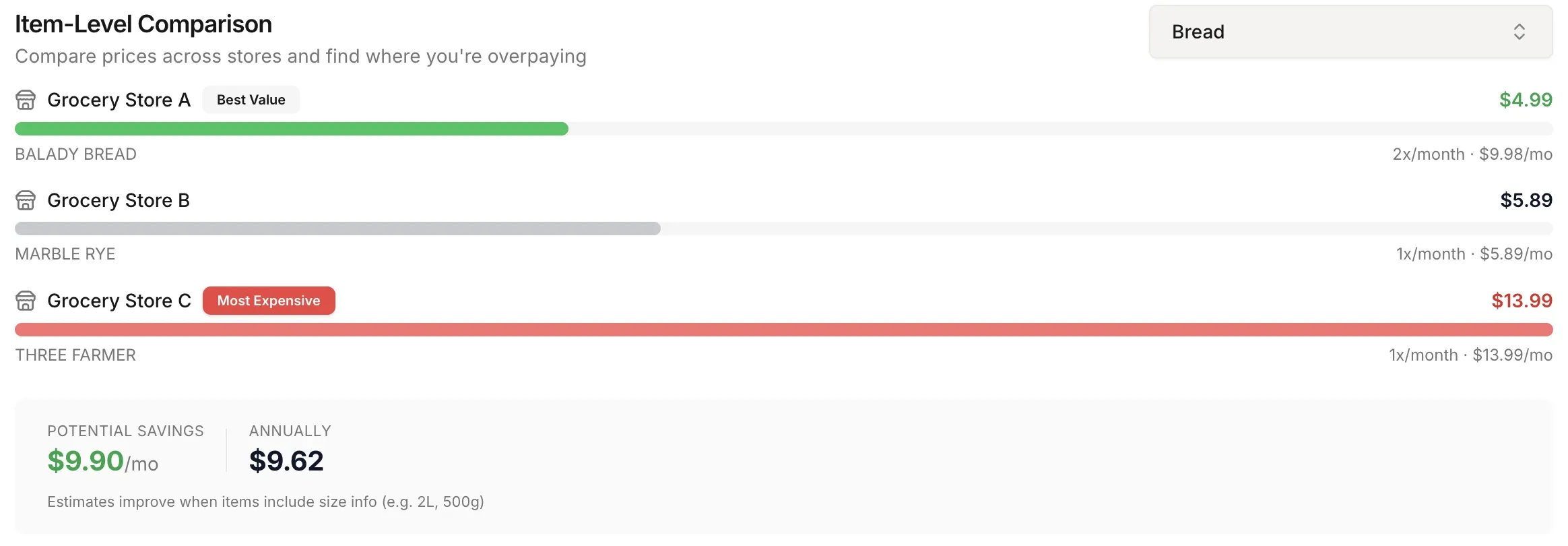
Store vs. store comparison
See side by side what the same item has cost you at each store in your receipt history.
Estimated savings over time
If one store has been consistently cheaper, the app tells you how much you would have saved if you had switched.
Built from your real receipts
Every number comes from prices you actually paid, not crowdsourced data or market estimates.
Price history per store
See how the price of that one item has changed over time at each store you shop at.
Smarter with every receipt
The more data you scan across months and stores, the tighter the savings estimate becomes.
How it works
Scan receipts from a few different stores
The comparison needs receipts from at least two stores you shop at regularly to have anything to compare.
Give it a few months
The more history you have, the sharper the savings estimate gets. A single trip is not enough data.
Filter to an item to see the comparison
Search for a staple like milk, eggs, or coffee. The app pulls every record of it across stores and shows you which one is actually cheaper.
Who is this for?
Budget shoppers using multiple stores
Know which store is actually cheapest for the items you personally buy.
Regular buyers of staple items
The feature shines when you consistently buy the same things. Small per-item differences compound over a year.
Anyone tired of guessing where to shop
Replace store-loyalty hunches with real numbers from your own receipts.
Pick an item. See which store is actually cheaper.
Type a staple you buy regularly. Milk, eggs, coffee, olive oil. The app pulls up every time you bought it across stores, in order, so you can see which store has quietly been charging you more. When one store is consistently cheaper, the app also tells you what you would have saved over the last few months if you had switched.
Built from your real receipts, not the internet's best guess.
Most price comparison tools use crowdsourced data or scraped pricing that may not reflect what you actually pay. Groceries Tracker uses your own receipts, so every comparison is based on what you personally saw at the register. Your prices, your stores, your history.
It gets smarter with every receipt you scan.
This feature is still in beta, and we are being upfront about what that means. You need a few months of receipts across at least two stores before the comparison has enough signal to produce a useful savings estimate. Item matching across different store receipt formats is still being refined, so expect the occasional near-miss. The fundamentals work, the numbers you see are real, and the comparison gets tighter every time you scan.
FAQ
Which stores are supported?
Any store works. As long as you can scan a receipt, the app will track prices for that store.
How many receipts do I need before the comparison is useful?
You need at least a few months of receipts across at least two different stores you shop at regularly. Comparing a single trip at two stores will not tell you much. The more history you build up, the more accurate the savings estimate becomes.
How do I actually see a comparison?
Filter by a specific item, like milk or coffee. The app pulls every time you bought it across stores and shows you which one has been cheapest.
What if item names differ slightly between stores?
The app tries to match the same item across different store receipt formats automatically. In beta, it occasionally misses near-matches. You can always review and confirm matches when that happens.
Is this feature stable?
It is currently in beta. The core comparison works and the numbers come from your real receipts, but item matching is still being refined. Use it alongside your existing shopping habits rather than as your only signal.