On the USDA moderate-cost plan in the August 2026 Cost of Food at Home report, two adults are $808 a month and a family of four (a man and woman aged 19–50 plus children 6–8 and 9–11) is $1,388 a month. $441 a month for one adult is the rounded midpoint of a woman and a man that age living alone, not a figure USDA publishes as a one-adult cost.
I tracked my own grocery spending for six months and I was genuinely shocked at how far off I was from the "average." I thought I was being responsible - buying store brands, cooking most meals at home, skipping the organic aisle more often than not. Turns out I was spending about $520 a month as a single person, which felt high until I actually looked at the data.
Here's the thing - the averages are kind of misleading unless you break them down properly. A single national per-person average doesn't tell you much when a single person in Manhattan has a completely different grocery reality than a family of four in Iowa. So I dug into the actual USDA numbers, cross-referenced them with BLS consumer expenditure data, and put together the breakdown I wish I'd had when I first Googled "am I spending too much on groceries."
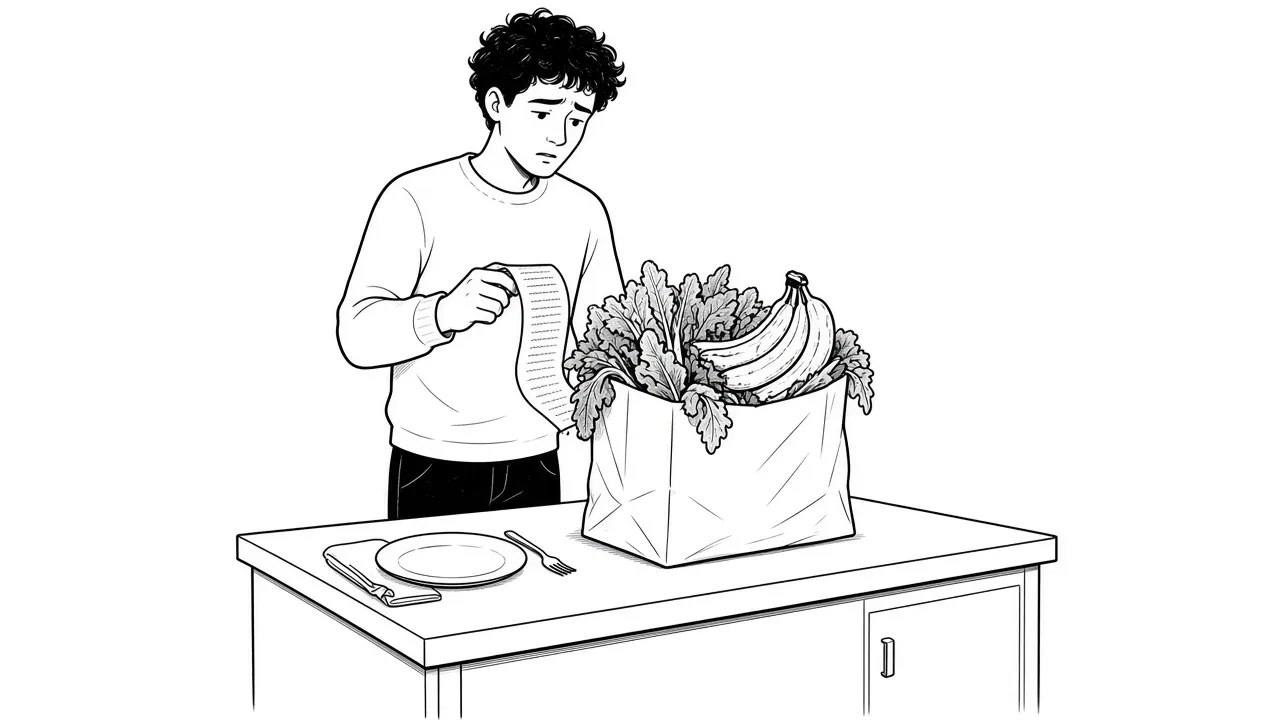
What the Average American Spends on Groceries in 2026
"Per household" does a lot of heavy lifting. A household could be one person or six.
The USDA publishes monthly food plan cost reports that break spending into four tiers - Thrifty, Low-Cost, Moderate-Cost, and Liberal. These are the closest thing we have to an official answer to "how much should groceries cost?" and they vary dramatically by household size.
If you want a quick, personalized estimate, try our average grocery cost calculator to see where you should land based on your household size and location.
Here's what those numbers actually look like when you break them down.
Average Monthly Grocery Cost for One Person (2026)
If you live alone, grocery shopping has a unique tax: everything is portioned for families. You buy a bunch of bananas and half of them go brown. You open a bag of salad and it's wilted before you finish it. Single-person households consistently spend more per person than larger households because of waste and the inability to buy in bulk efficiently.
On the USDA moderate-cost plan in the August 2026 Cost of Food at Home report, two adults are $808 a month and a family of four (a man and woman aged 19–50 plus children 6–8 and 9–11) is $1,388 a month. $441 a month for one adult is the rounded midpoint of a woman and a man that age living alone, not a figure USDA publishes as a one-adult cost.
Honestly, when I saw my own $520/month number, I felt better knowing I was just slightly above moderate rather than wildly off base.
Remember this is groceries only - no restaurants, no coffee shops, no "I'll just grab something" at the gas station.
For a deeper dive into setting a personal target, check out our guide on how much you should actually spend on groceries.
Average Monthly Grocery Cost for Two People (2026)
Here's something that surprises people: two adults don't spend 2x what one person spends. It's more like 1.8x. Why? Shared bulk buying, less food waste (someone actually eats the other half of that avocado), and more efficient meal planning when you're cooking for two.
On the USDA moderate-cost plan in the August 2026 Cost of Food at Home report, two adults are $808 a month and a family of four (a man and woman aged 19–50 plus children 6–8 and 9–11) is $1,388 a month. $441 a month for one adult is the rounded midpoint of a woman and a man that age living alone, not a figure USDA publishes as a one-adult cost.
Two adults don't simply double a one-adult bill. Sharing groceries covers that jar of peanut butter, that carton of eggs, that bag of rice.
I'll be honest, when my partner and I first combined our grocery tracking, we were at $1,050/month. That put us solidly in the moderate-to-liberal range. The biggest surprise? We were both buying the same staples separately before we moved in together. Two half-used bottles of olive oil, two sad bunches of cilantro turning brown in separate fridges. Combining actually saved us about $200/month without trying.
For tips on how to bring that number down further, our grocery budgeting for beginners guide has some practical starting points.
Average Weekly Grocery Cost for a Family of Four (2026)
This is the one everyone wants to know. On the USDA moderate-cost plan in the August 2026 Cost of Food at Home report, two adults are $808 a month and a family of four (a man and woman aged 19–50 plus children 6–8 and 9–11) is $1,388 a month. $441 a month for one adult is the rounded midpoint of a woman and a man that age living alone, not a figure USDA publishes as a one-adult cost.
One thing worth noting: these USDA estimates assume a family of two adults and two children ages 6-8 and 9-11. If your kids are teenagers, add 10-15% to these numbers. Teenage boys in particular eat like they're training for the Olympics. Families with kids under 5 can subtract about 10-15%.
For more context on how your bill stacks up, see our full average grocery bill breakdown for 2026 which includes state-by-state and age-based comparisons.
USDA Food Plans Explained (What They Actually Mean)
The USDA has been publishing these food plans since the 1960s, and they get updated monthly. But the plan names are pretty vague, so here's what each one actually looks like in practice:
Thrifty Plan - This is the plan SNAP (food stamp) benefits are based on. It basically means you're cooking everything from scratch, buying store brands exclusively, eating a lot of beans and rice, and never impulse-buying anything. No pre-cut vegetables, no snack packs, no "I don't feel like cooking tonight" frozen pizzas. It's doable, but it requires real discipline and time in the kitchen.
Low-Cost Plan - A step up. You're still cooking most meals at home, but you can buy some convenience items. Store-brand cereal, pre-made pasta sauce, maybe some deli meat for sandwiches. You're not clipping coupons for every trip, but you're still paying attention to prices.
Moderate-Cost Plan - This is where most Americans actually land, whether they plan to or not. You cook at home most nights but buy some pre-made stuff. You get name-brand items you like. You throw some snacks in the cart. You don't agonize over every purchase, but you're not being reckless either. If you shop without a strict list and buy what looks good, you're probably on this plan.
Liberal Plan - This is... well, Whole Foods. Organic everything, specialty items, premium cuts of meat, fancy cheese, the good olive oil. You buy what you want without worrying much about price. It's not irresponsible - it's just a different relationship with food spending. If your grocery store has a charcuterie section and you visit it regularly, you're on the liberal plan.
The important thing to know: these plans only cover food prepared at home. No restaurants, no takeout, no UberEats. Your actual food spending is almost certainly higher than whatever plan you identify with because most people eat out at least a few times a month.
Why Your Grocery Bill Doesn't Match the Average
If you just looked at those tables and thought "there's no way I'm only spending that much" - you're probably right, and there are real reasons for it:
Location matters - a lot
A gallon of milk in New York City costs 30-40% more than in rural Kansas. The USDA averages are national, so if you live in a high cost-of-living area, your "moderate" spending might look like someone else's "liberal." Hawaii and Alaska are in a league of their own - grocery costs there can be 25-50% above the national average.
Dietary needs add up
Gluten-free bread costs 2-3x more than regular bread. Dairy-free milk alternatives are consistently $1-2 more per carton. Vegan and organic diets trend 20-30% higher than conventional. If you have dietary restrictions - by choice or necessity - the averages don't apply to you the same way.
Shopping habits are sneaky
People who shop at Costco or Sam's Club and buy in bulk tend to spend less per unit but more per trip. People who make small daily trips to the corner store spend more overall because of impulse purchases - the average unplanned grocery trip costs about $54. How you shop changes what you spend as much as what you buy.
Your "grocery bill" isn't all groceries
This is the one that gets people. Cleaning supplies, paper towels, toiletries, pet food, laundry detergent - all of it shows up on your grocery store receipt and feels like "grocery spending." But the USDA numbers only count food. If 15-20% of your grocery store spending is actually household items (which is common), your food-only number is lower than you think.
Snacks and beverages are the silent budget killer
I'll be honest, I was spending way more than I thought on snacks. When I finally tracked it, snacks and beverages were eating up nearly 25% of my grocery budget. That's not unusual - the average American spends about $1,200/year on snacks alone. It doesn't feel like a lot in the moment, but $5 here and $7 there adds up to hundreds per month.
How to Actually Track Your Spending
Here's the honest truth: averages are interesting, but they don't help you save money. Knowing a published average doesn't change your behavior. What changes your behavior is seeing that YOU spent $147 on beverages last month, or that your Trader Joe's trips cost 22% more than your Aldi trips for basically the same stuff.
The only way to get that level of detail is to actually track what you buy. Not just the totals - the items. There are a few ways to do this:
The spreadsheet method: Keep every receipt, type everything in manually. It works. It's free. You will almost certainly stop doing it after two weeks because it's tedious. I've tried this three separate times. If you want a head start, our grocery spending spreadsheet template can save you some setup time.
The bank statement method: Look at your credit card transactions tagged as "groceries." You get totals by store, but no item detail. You'll know you spent $180 at Kroger but not what you bought. Better than nothing, but not actionable.
The receipt scanning method: This is what I ended up doing. You scan your receipt after each trip and the app reads every item, categorizes it, and tracks it over time. Groceries Tracker does this - you scan, it reads, and within a few weeks you can see exactly where your money goes by category, store, and item.
The free grocery budget calculator on our site can give you a starting benchmark based on your household size and location. But the real value comes from tracking your actual spending against it.
Where Do You Fall? (Single Person Monthly)
On the USDA moderate-cost plan in the August 2026 Cost of Food at Home report, two adults are $808 a month and a family of four (a man and woman aged 19–50 plus children 6–8 and 9–11) is $1,388 a month. $441 a month for one adult is the rounded midpoint of a woman and a man that age living alone, not a figure USDA publishes as a one-adult cost.
The Bottom Line
On the USDA moderate-cost plan in the August 2026 Cost of Food at Home report, two adults are $808 a month and a family of four (a man and woman aged 19–50 plus children 6–8 and 9–11) is $1,388 a month. $441 a month for one adult is the rounded midpoint of a woman and a man that age living alone, not a figure USDA publishes as a one-adult cost. Your number still depends on where you live, what you eat, and how you shop.
Knowing the average is step one. It tells you roughly where you should be. But knowing YOUR number is what actually helps you save. The people I know who've gotten their grocery spending under control didn't do it by reading USDA reports - they did it by looking at their own receipts and going "oh, that's where it's going."
If you've made it this far, you're already more informed than 95% of people who Google "average grocery cost." The next step is finding out your actual number. Try the free grocery budget calculator for a quick benchmark, or scan your first receipt to see exactly where your money goes.
The part I didn't expect to find useful: if you do end up under the benchmark for your household size some months, that surplus is real money. Most months it disappears back into whatever the next month brings. Groceries Tracker's Savings Goals feature catches it: any month your spending lands below the benchmark for your household size and country, the surplus credits toward a goal you set. A trip. A new appliance. A slush fund. It's a small mechanic, but it stops the savings from quietly disappearing.
Frequently Asked Questions
What is the average monthly grocery cost for one person in the US in 2026?
On the USDA moderate-cost plan in the August 2026 Cost of Food at Home report, two adults are $808 a month and a family of four (a man and woman aged 19–50 plus children 6–8 and 9–11) is $1,388 a month. $441 a month for one adult is the rounded midpoint of a woman and a man that age living alone, not a figure USDA publishes as a one-adult cost.
How much should two adults spend on groceries per month?
On the USDA moderate-cost plan in the August 2026 Cost of Food at Home report, two adults are $808 a month and a family of four (a man and woman aged 19–50 plus children 6–8 and 9–11) is $1,388 a month. $441 a month for one adult is the rounded midpoint of a woman and a man that age living alone, not a figure USDA publishes as a one-adult cost. Two people usually spend less than double one person because of shared bulk buying and reduced food waste.
What does the August 2026 moderate-cost plan say for a family of four?
On the USDA moderate-cost plan in the August 2026 Cost of Food at Home report, two adults are $808 a month and a family of four (a man and woman aged 19–50 plus children 6–8 and 9–11) is $1,388 a month. $441 a month for one adult is the rounded midpoint of a woman and a man that age living alone, not a figure USDA publishes as a one-adult cost.
Why do I spend more on groceries than the average?
The most common reasons are location (high cost-of-living areas can add 25-40%), dietary needs (gluten-free and organic diets cost 20-30% more), non-food items counted as "groceries" (cleaning supplies, toiletries), and snack spending that adds up faster than you realize. The USDA averages also only count food at home - no restaurants or takeout.
How can I track my grocery spending per person?
The most effective method is receipt scanning - apps like Groceries Tracker read every item from your receipt and categorize spending automatically. For a quick estimate, check the free grocery budget calculator. For a full breakdown of tracking methods, see our guide on how much you should spend on groceries.
What's a realistic monthly grocery savings goal for my household?
On the USDA moderate-cost plan in the August 2026 Cost of Food at Home report, two adults are $808 a month and a family of four (a man and woman aged 19–50 plus children 6–8 and 9–11) is $1,388 a month. $441 a month for one adult is the rounded midpoint of a woman and a man that age living alone, not a figure USDA publishes as a one-adult cost. The goal should be small enough to hit consistently but specific enough to feel like progress: a weekend trip, an emergency fund, a new appliance you've been putting off. Groceries Tracker's Savings Goals feature tracks the under-benchmark surplus automatically each month.
Find Out What You're Actually Spending
Scan one receipt. See every item broken down by category. Most people find $100+/month in spending they didn't realize was adding up.
No credit card required · Cancel anytime
Last updated: March 29, 2026. On the USDA moderate-cost plan in the August 2026 Cost of Food at Home report, two adults are $808 a month and a family of four (a man and woman aged 19–50 plus children 6–8 and 9–11) is $1,388 a month. $441 a month for one adult is the rounded midpoint of a woman and a man that age living alone, not a figure USDA publishes as a one-adult cost. August 2026 Cost of Food at Home.