Grocery price comparison across different stores using Groceries Tracker

7 Best Grocery Price Comparison Apps in 2026

March 29, 2026

I shop at three different stores. Walmart for bulk stuff, a local chain for produce, and Costco for whatever Costco convinces me I need that week.

For years, I assumed Costco was always the cheapest. Bulk = savings, right?

Not really.

I spent a month testing every grocery price comparison app I could find, and the biggest thing I learned is this: most of them don't actually compare prices the way you think they do.

My local chain was cheaper for chicken, eggs, and most dairy. Costco won on olive oil and coffee. Walmart was cheapest for canned goods and cleaning supplies. But figuring all of that out was way harder than it should've been.

Feature Comparison

AppPrice ScanningStore CoverageReal-Time PricesFlyer DealsFree Tier
Groceries TrackerYes (receipts)Any storePost-purchaseNo14-day trial
FlippNo2,000+Flyer pricesYesYes (fully free)
BasketNoWide (US)YesLimitedYes (fully free)
Checkout 51Yes (rebates)US & CanadaNoOffers onlyYes (fully free)
FlashfoodNoSelect storesYesClearance onlyYes (fully free)
Grocery DealzNo40 US statesYesNoYes (fully free)
Google ShoppingNoBroadYesNoYes (fully free)

Why Price Comparison Is Harder Than It Sounds

Grocery prices aren't fixed.

The same item can swing a lot week to week depending on sales. Prices also vary by location - even between stores from the same chain. So when people ask "which store is cheapest," the honest answer is: it depends on what you buy, when you buy it, and where you shop. Not a satisfying answer, I know.

Another thing I didn't expect: most apps show advertised prices, not what you actually pay. Flyers don't account for regional pricing differences, items quietly going up in price, member-only discounts, or things just being... wrong sometimes. I ran into mismatches more than once during testing.

The only way to know what you're really paying is to look at what you actually paid.

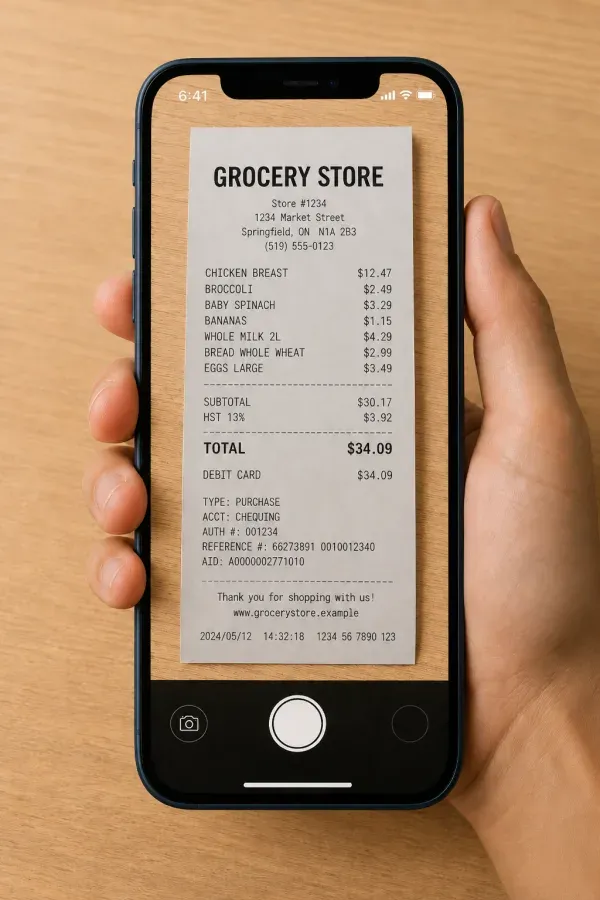
Groceries Tracker tracks your actual prices across stores automatically. Scan your receipt and see which store charges more for the same items.

What Makes a Good Grocery Price Comparison Tool?

Forget the marketing pages. This is what determines whether you'll still use an app after a week:

  • Accuracy: If the price doesn't match what you see in-store, you stop trusting it fast.
  • Coverage: An app can look great, but if it doesn't support the stores you actually go to, it's useless. Some are US-only, some are Canada-focused. Check before you invest time.
  • Freshness of data: Prices change constantly. Anything even slightly outdated can mislead you.
  • Real vs. advertised prices: This is the big one. Most apps show what stores say things cost - not what you actually paid.
  • Speed: If it takes too long to check prices, you just won't do it. I know this because I stopped.

The 7 Best Grocery Price Comparison Apps in 2026

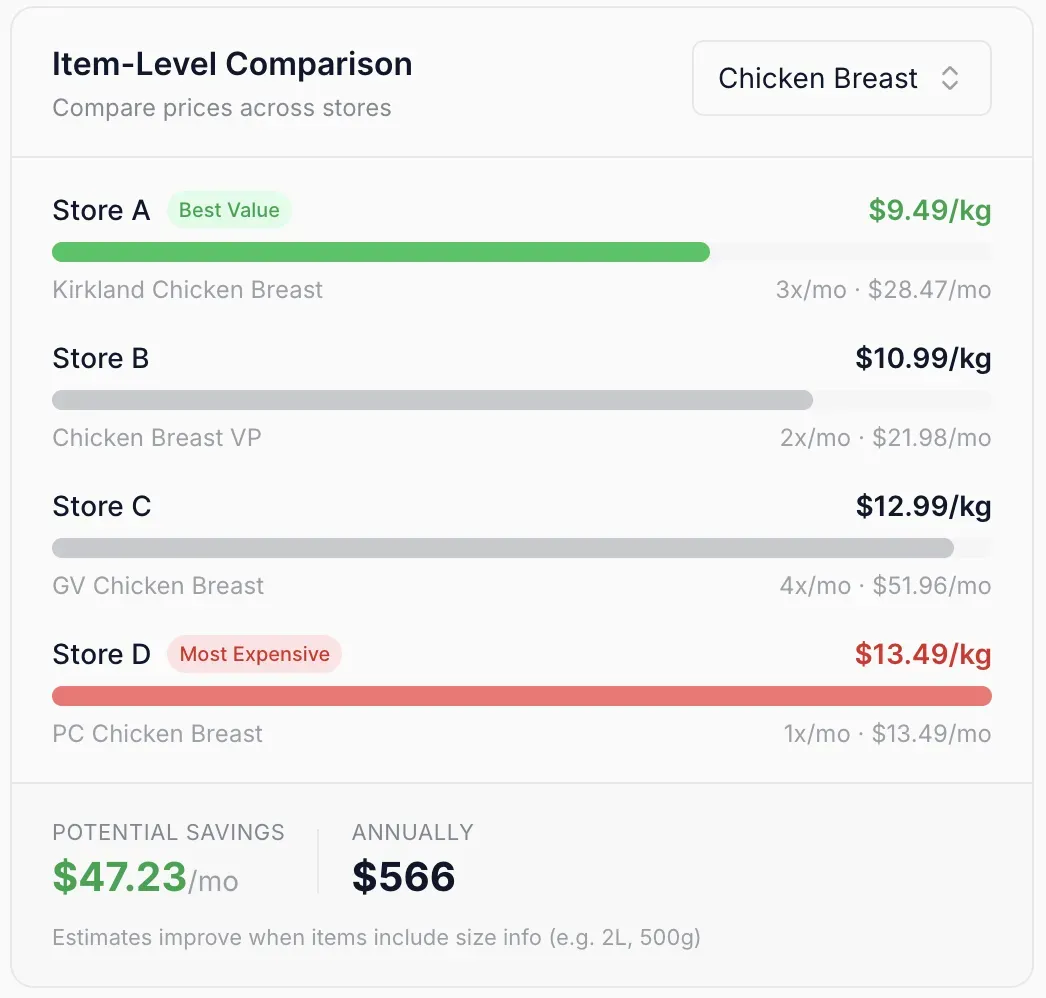
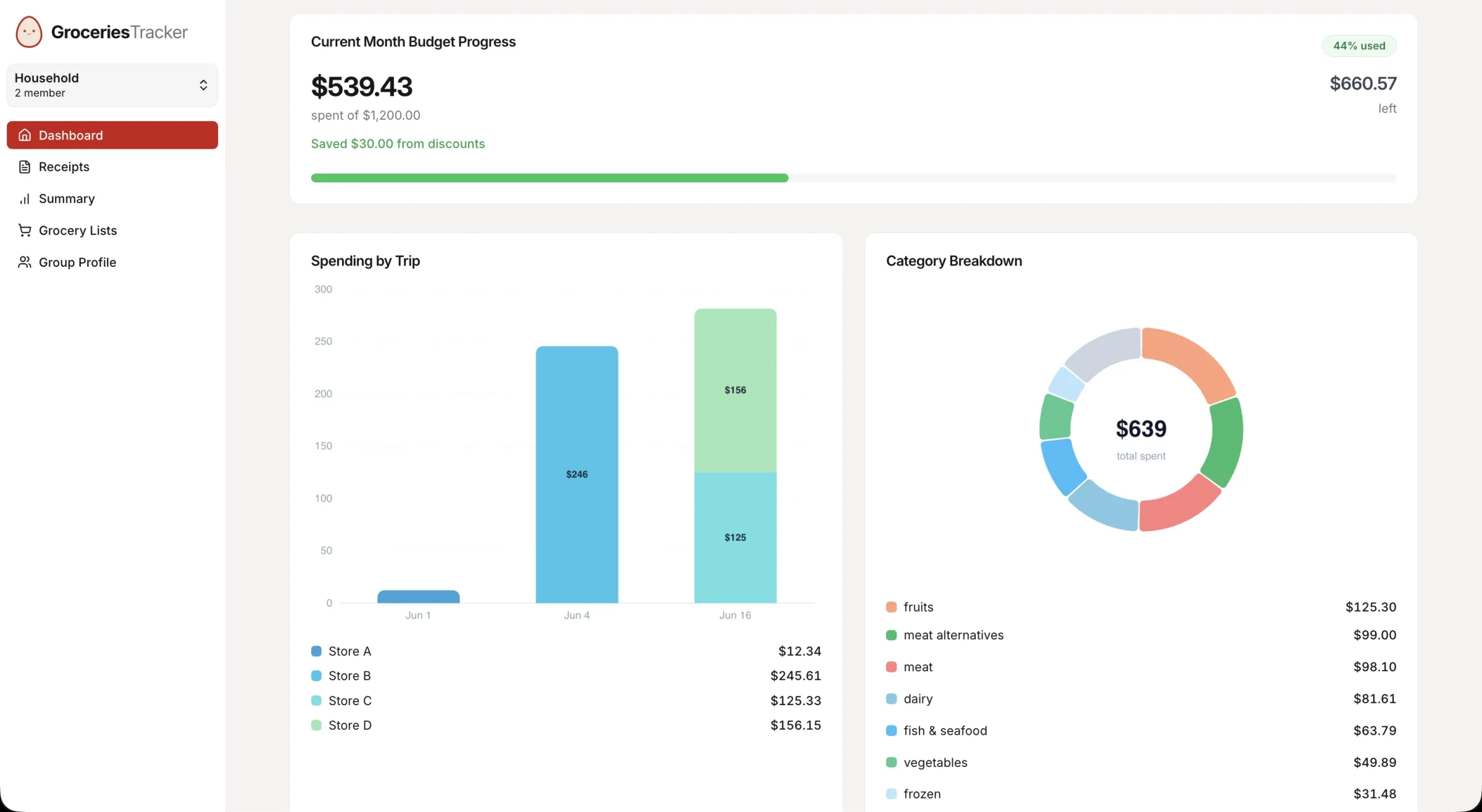
Groceries Tracker showing price comparison across different stores

1. Groceries Tracker

Best for: Tracking your actual prices across stores

Verdict: The only app here that compares what you actually paid, not what stores advertise. Different approach than the flyer apps, but the data is real.

This one works differently from everything else on this list.

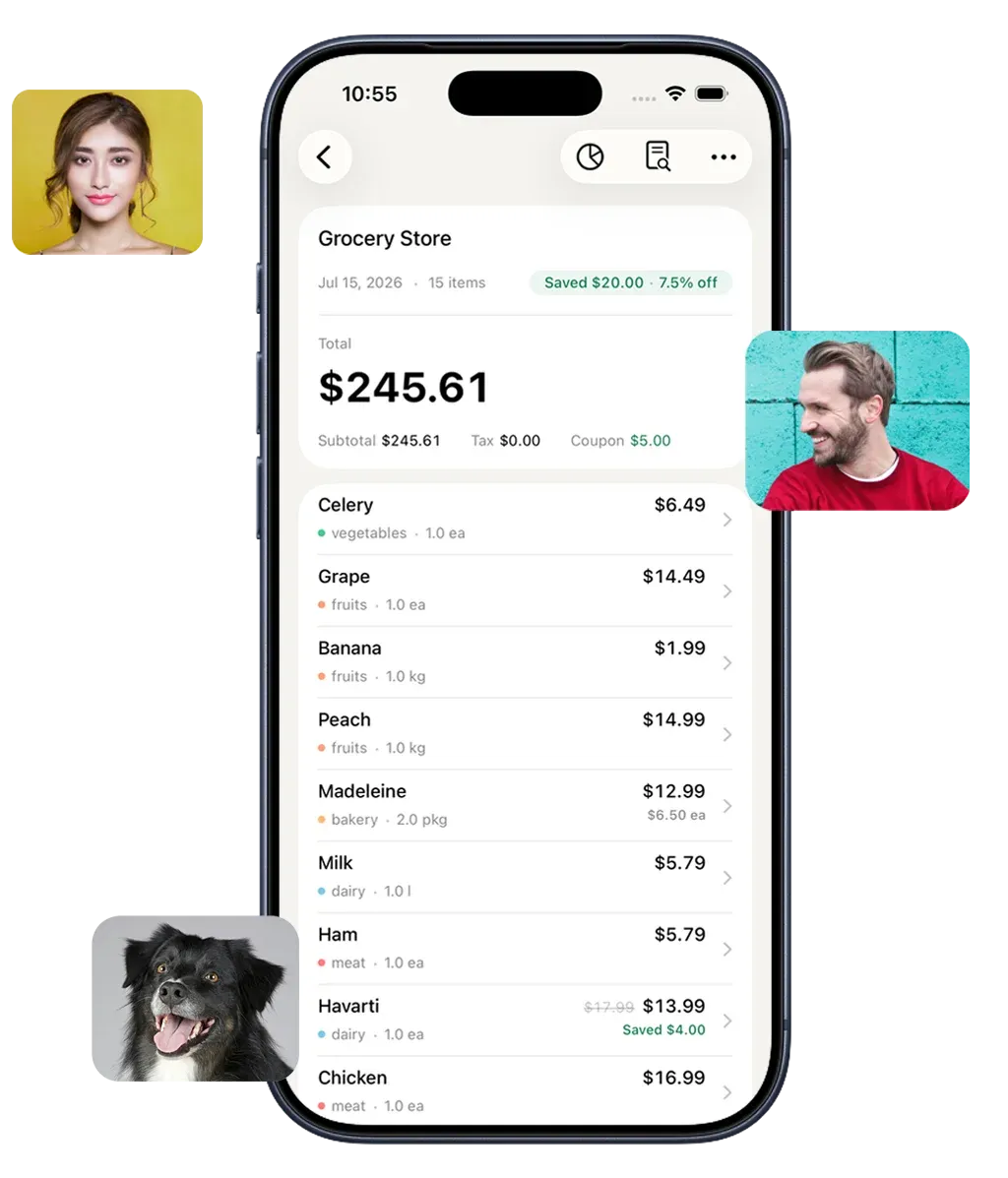
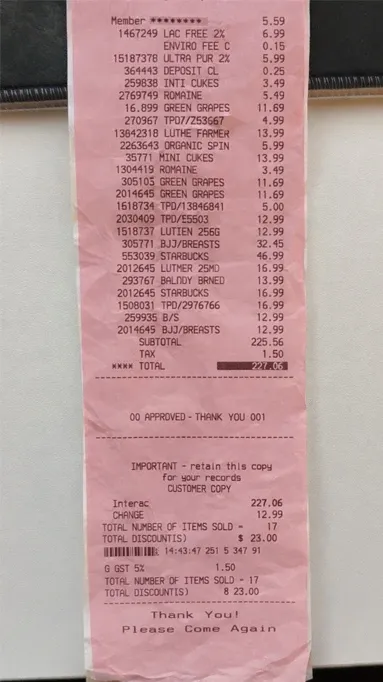
Instead of trying to predict prices before you shop, it tracks what you already paid. You scan your grocery receipt, it reads every item with AI, and over time it builds a price history across every store you shop at.

After a few weeks, patterns start to show. Chicken breast was consistently $2/kg cheaper at my local chain than at Walmart. Eggs were cheapest at Costco (no surprise). Butter was actually cheaper at Walmart by about 40 cents. These aren't sale prices or flyer deals - they're what I actually paid, at the locations I actually go to.

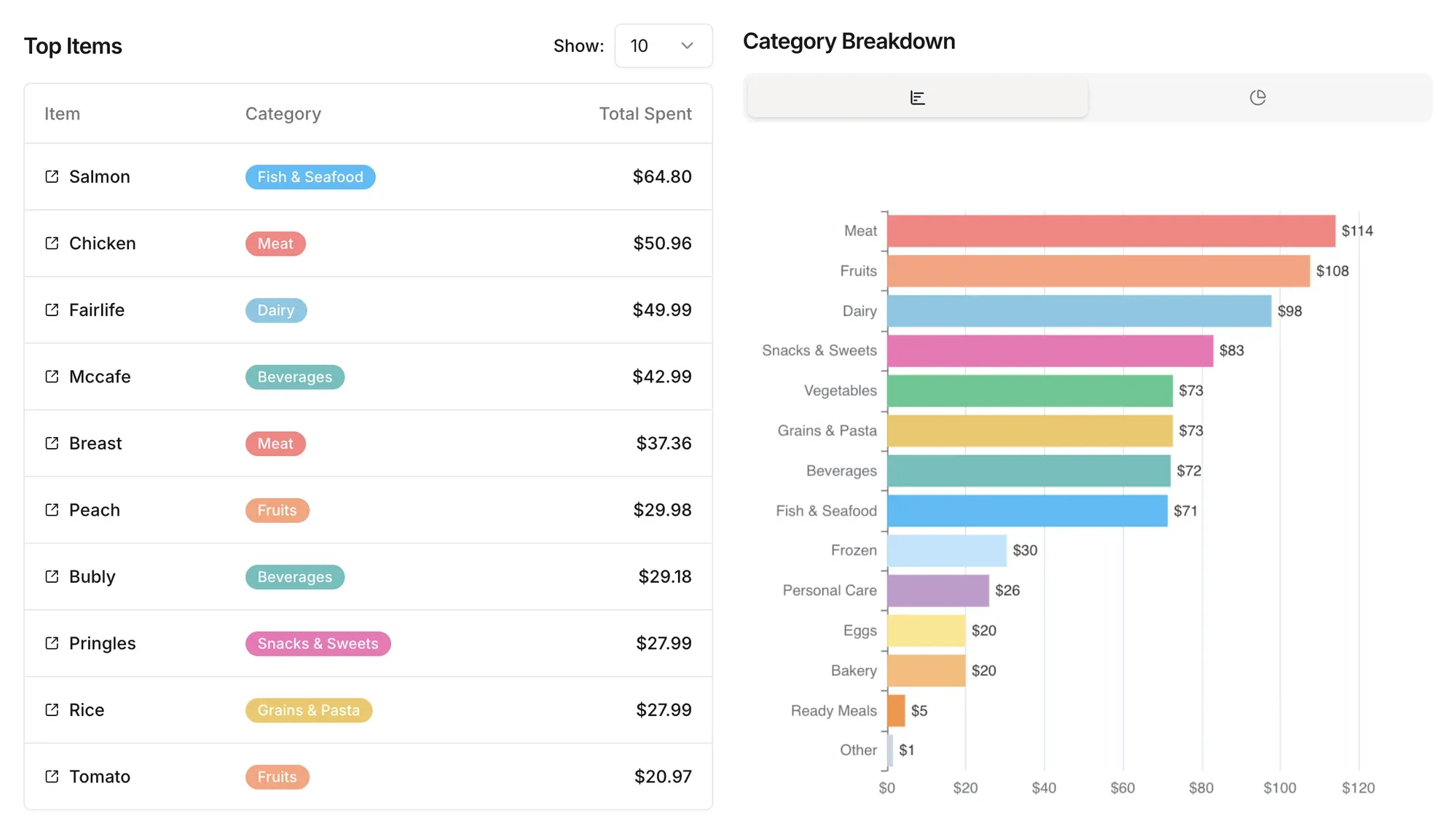
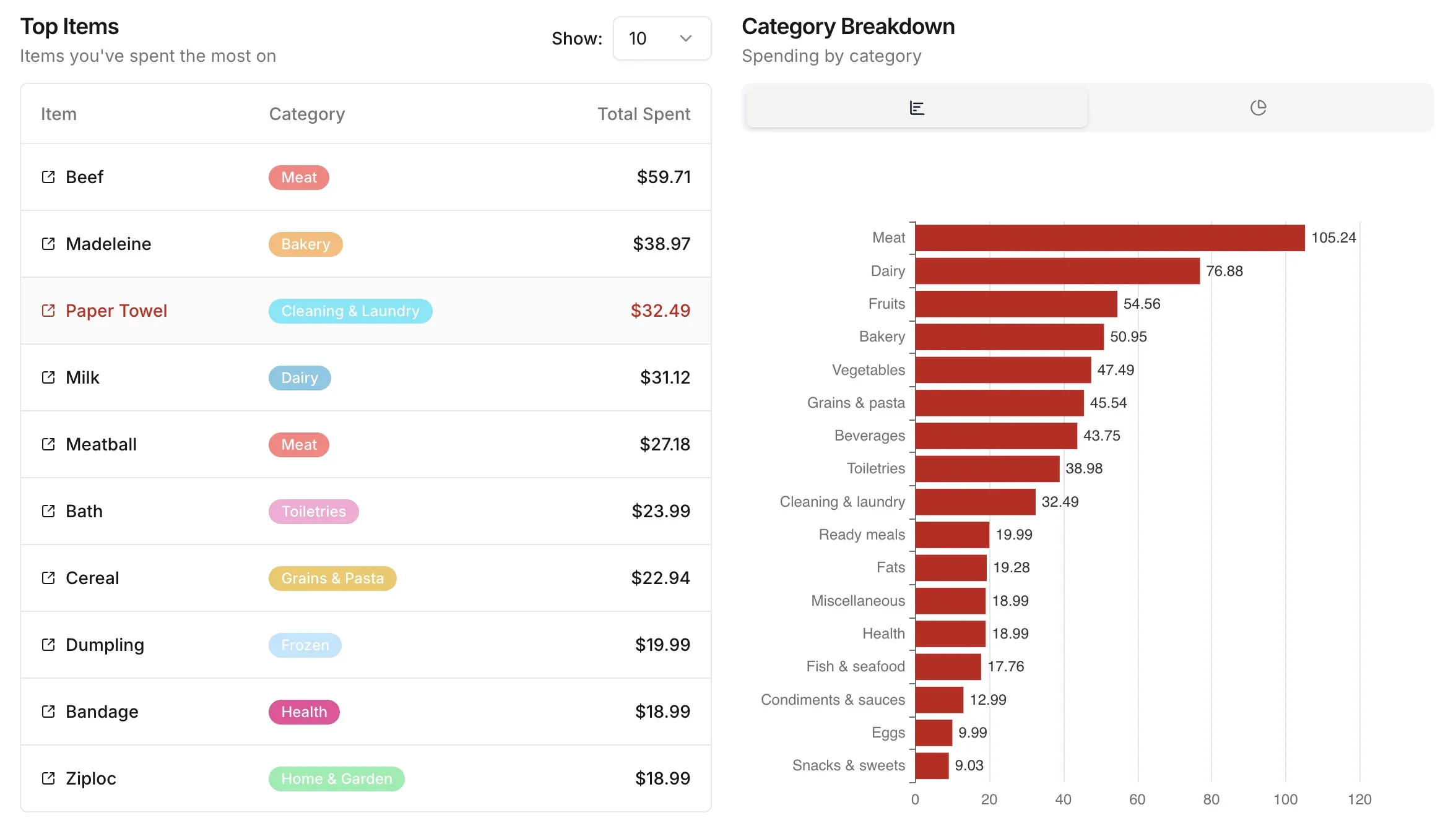
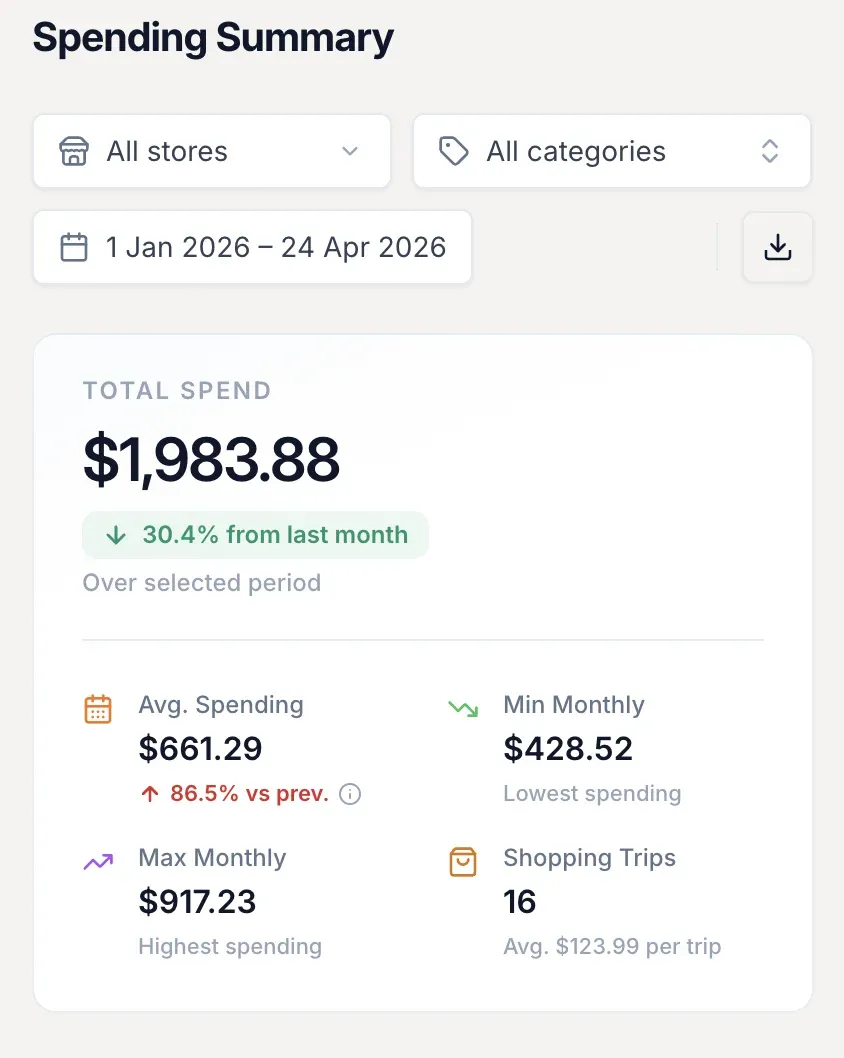
It also tracks spending by category, so you can see how much goes to produce vs. snacks vs. meat each month. I was spending way more on beverages than I thought. If you're trying to set a budget, the free grocery budget calculator is worth trying alongside it.

One thing worth mentioning: Groceries Tracker doesn't sell your data. It's subscription-based, so your shopping history stays yours.

  • AI receipt scanning - reads every item automatically
  • Price history for every item across all your stores
  • Works with any store - not limited to partner retailers
  • Household sharing - everyone's receipts in one dashboard
  • 14-day free trial, no credit card required
Flipp

2. Flipp

Best for: Digital flyers and weekly deals

Verdict: The best flyer app out there. Great for finding this week's deals, but you're comparing advertised prices, not what you'll actually pay at checkout.

Flipp is basically a flyer aggregator. Every weekly flyer from every store near you, in one app. Search an item, and it shows you who has it on sale this week.

It's simple, fast, and genuinely useful if you're flexible about where you shop. Completely free too - no premium tier, no ads blocking features. I respect that.

The catch: these are flyer prices. They're not always exact, and they expire quickly. I ran into two cases where the in-store price didn't match. And Flipp can't tell you which store is cheapest over time - you're reacting to deals, not building a consistent strategy.

  • 2,000+ store flyers in one place
  • Search by item to find best advertised price
  • Shopping list with clipped deals
  • Completely free - no premium tier
Basket

3. Basket

Best for: Real-time price comparison before shopping

Verdict: The closest thing to real pre-shopping price comparison. Build a list, see totals by store. But coverage is spotty outside major US metros.

Basket tries to do what most people expect from a price comparison app: build a list, see totals by store. And when it works, it's great. I built a list of 15 items and it showed me $62 at Walmart, $71 at Kroger, $58 at Aldi. That's genuinely useful.

It works with over 100 chains, and the pricing was usually close to what I actually paid - within a dollar or two.

But coverage is inconsistent, especially outside major US areas. Some stores just aren't there. And if you're in Canada, good luck. It also doesn't track anything over time - every comparison is a one-time snapshot. You're starting from scratch each time you open it.

  • Real-time price comparison across local stores
  • Shopping list with per-store totals
  • Barcode scanning for exact product matching
  • Free to use
Checkout 51

4. Checkout 51

Best for: Cash back on groceries

Verdict: Not really a price comparison tool - it's a rebate app. But if you're already buying specific items, the cash back adds up over time.

This is a rebate app, not a comparison tool. Each week it lists offers - buy this yogurt, get $0.75 back. Upload your receipt, it credits your account. Cash out at $20.

It works at any store in the US and Canada (it's a Canadian company). New offers drop every Thursday. If you stick to items you'd buy anyway, it's free money. If you chase deals on stuff you don't need, you'll spend more.

As a price comparison tool? It doesn't work. It doesn't tell you which store is cheaper. And the offers are brand-specific - if you buy store-brand everything (like I mostly do), there might only be 3-4 relevant offers per week. Nice supplement. Not a strategy.

  • Cash back on specific grocery items weekly
  • Works at any store (receipt-based verification)
  • Strong US and Canadian coverage
  • Free - cash out at $20 minimum
Flashfood

5. Flashfood

Best for: Discounted near-expiry items

Verdict: Incredible deals if your local store participates. I got a $12 meat pack for $4. But availability is completely unpredictable.

Flashfood partners with over 2,300 stores across 20 US states and 10 Canadian provinces to sell near-expiry items at steep discounts - up to 50% off. You pay in the app, pick up from a dedicated Flashfood Zone in-store. Participating stores include Meijer, Kroger (added in 2025), and various independent grocers.

The deals are real. Sometimes the savings are incredible. I scored a meat pack for $4.29 that would've been $12+ at regular price.

But you can't plan around it. You take what's available, and what's available changes every day. It's more of a "check it and get lucky" app than a planning tool. High savings, zero predictability.

  • 50%+ off near-expiry grocery items
  • Pay in-app, pick up in store
  • Reduces food waste - good for the planet too
  • Free to use

Most price comparison apps show you advertised prices. Groceries Tracker shows you what you actually paid - and which store is really cheaper for your regular items.

Grocery Dealz

6. Grocery Dealz

Best for: Real-time price comparison across major chains

Verdict: The newest app on this list, and it does something most others don't - real-time shelf prices, not flyer prices. US only, but impressive if you're in a covered area.

The new kid on the block. Grocery Dealz expanded nationally in early 2026 and tries to show current prices across major retailers - Walmart, Target, Kroger, Albertsons, H-E-B, Safeway, and more. Not flyer prices. Not last week's prices. Current prices.

You can build a shopping list and see totals by store, similar to Basket but with fresher data. It even lets you push your list into Instacart for delivery. Nice touch.

In testing, it looked promising - but coverage felt limited and a bit inconsistent. It's US-only (40 states), so Canadian shoppers are out. No price history either. It's the kind of app that could become really useful, but right now it depends heavily on where you live.

  • Real-time prices from Walmart, Target, Kroger, Albertsons, H-E-B, and more
  • Push your list to Instacart for delivery
  • Available in 40 US states
  • Completely free
Google Shopping

7. Google Shopping

Best for: Quick one-off price checks

Verdict: Not a grocery app at all, but surprisingly useful for spot-checking specific items. Don't try to plan a whole trip with it.

Not a grocery app. But surprisingly useful for spot-checking specific packaged items - search "Kirkland organic olive oil" or "Tide pods 42 count" and you'll often see prices from nearby stores and online retailers.

Works well for branded, packaged goods. Doesn't work at all for produce, meat, dairy, or anything priced by weight. Google has no idea what your local store charges for bananas.

No price history, no alerts, no shopping list. It's a quick sanity check when you're wondering "is this actually a good price?" That's it.

  • Prices from nearby stores for packaged goods
  • No app needed - works in any browser
  • Online and in-store pricing
  • No fresh grocery pricing (produce, meat, dairy)

Which Tool Should You Use?

Skip the feature table for a second. Just pick based on what you're actually trying to do:

"I want to know the cheapest store before I go."

Flipp or Basket. Flipp for flyer deals, Basket for real-time price totals on your shopping list.

"I want to track prices over time for items I actually buy."

Groceries Tracker. Scan your receipts and build a real price history for the items you actually buy, at the stores you actually go to. Nothing else does this.

"I just want to see this week's deals."

Flipp. Free, 2,000+ stores, works in the US and Canada. Hard to beat for flyer browsing.

"I want real-time prices, not flyer ads."

Grocery Dealz. Real-time pricing from Walmart, Target, Kroger, and more. US only, but the data is current.

"I want cash back or automated discounts."

Checkout 51 or Flashfood. Checkout 51 for brand-specific rebates, Flashfood for steep discounts on near-expiry items.

"I just want to check one specific product's price."

Google Shopping. Quick, no app to install, good for packaged goods. Useless for anything fresh.

The Bottom Line

Most "price comparison" tools aren't really comparing prices. They're showing you promotions, partial data, or snapshots that don't hold up over time.

If you actually want to spend less on groceries, the biggest shift isn't finding better deals. It's understanding your own patterns: what you buy, where you buy it, and what you consistently pay. Pair that with a grocery list maker with prices so you know what you'll spend before you walk into the store. Everything else is just noise.

Use Flipp or Basket for pre-shopping deals. Use Groceries Tracker to build the long-term picture. If you're not sure what your budget should even be, start with the free grocery budget calculator. And if you want to understand how receipt scanning works, we wrote a whole guide on grocery receipt scanners.

We also tested six grocery budget apps in a separate comparison if budgeting is more your thing.

Ready to See What You're Really Paying?

Stop guessing which store is cheaper. Scan your receipts and see real price comparisons based on what you actually buy.

No credit card required · Cancel anytime

Last updated: March 29, 2026