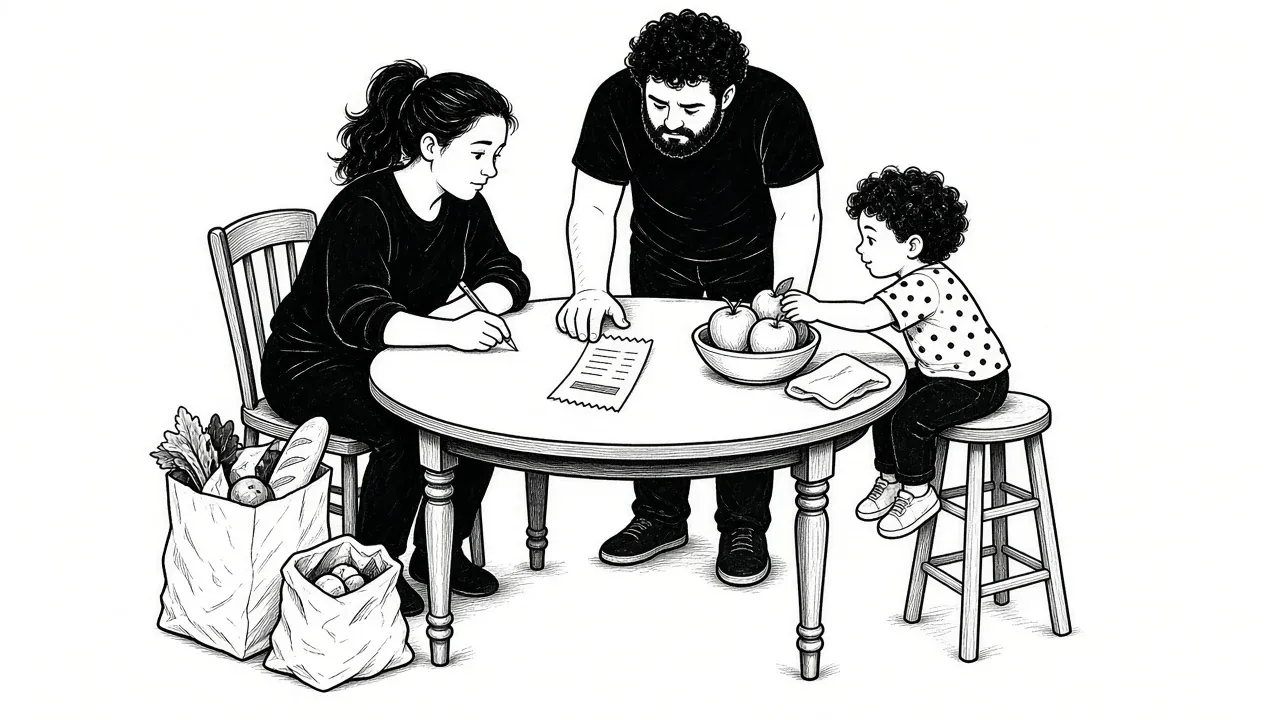
Your grocery bill feels higher even when you buy the same things because of two quiet culprits: shrinkflation, where the package quietly shrinks while the price stays the same, and unit-price creep, where the cost per ounce slowly rises. You are not buying more. You are paying more per unit for less product.
A few weeks ago I caught myself standing in the cereal aisle doing math on my phone like a lunatic. My cart had the exact same stuff it always has. Same brands, same list, nothing fancy. But the total at checkout kept creeping up, and I couldn't point at a single thing and say "that's the reason."
So I went looking. And the answer turned out to be reassuringly simple: it mostly is not you, and it is not your budgeting. It is that the boxes got smaller and the per-unit price went up while the sticker on the shelf stayed familiar enough that you never noticed. Here's how to actually see it, with a quick bit of math you can do in the aisle.
What is shrinkflation?
Shrinkflation is when a product gets smaller but the price stays the same. You pay the same $4.49 you always have, so nothing looks wrong, except there's now less in the box. It is inflation wearing a disguise, because the increase is hidden in the package size instead of the price tag.
Sizes and prices below are illustrative examples to show the math, not specific product claims.
Once you know the pattern, you start seeing it everywhere. A few realistic examples of how it shows up:
- Cereal: a box drops from 18 oz to 14.25 oz, same shelf price. Three or four fewer bowls per box, but the sticker never changed.
- Chips and snacks: the bag looks identical but quietly goes from 10 oz to 9.25 oz. Same price, more air.
- Ice cream: the carton slims from 1.5 quarts to 1.42 quarts. Same tub on the shelf, a little less inside.
- Paper towels: the roll keeps its size but the sheet count per roll drops, or the sheets themselves get a touch smaller. Same "6 rolls," fewer actual sheets.
If you've felt like your money disappears faster at the store lately, this is a big part of why. It is not in your head, and it is not a sign you've gotten worse with money. The unit of measurement moved under your feet.
How do you read the unit price to see the real cost?
The shelf price tells you what you pay today. The unit price tells you what you actually get for it, and it is the number shrinkflation can't hide from. Here's the in-store routine, it takes about ten seconds:
- 1Find the small unit-price tag. On most shelf labels it's the tiny number in the corner, usually printed as "per oz," "per 100g," or "per sheet."
- 2Check what unit it uses. Two sizes of the same product sometimes list different units (per oz vs per 100 sheets), so make sure you're comparing apples to apples before you trust the number.
- 3Compare same-unit across sizes and brands. The biggest box is not always the cheapest per ounce, and the store brand is not always cheaper. The unit price settles it instantly.
- 4Remember last trip's number. Shrinkflation only shows up over time. If you have last month's receipt, you can see whether your usual item quietly got more expensive per ounce.
A quick worked example
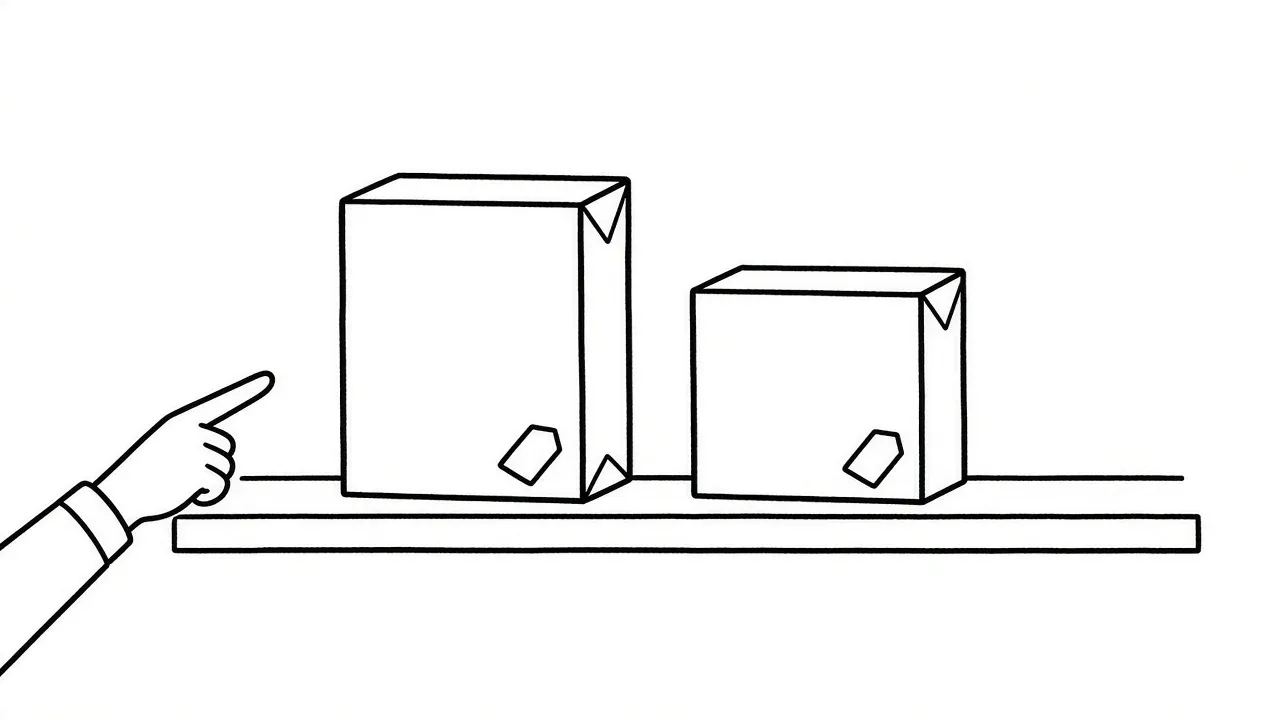
Take that cereal box. The shelf price never changed, but watch what happens to the unit price when the size shrinks:
| Box | Shelf price | Size | Price per oz | Price per 100g |
|---|---|---|---|---|
| Before | $4.49 | 18 oz (510g) | ~$0.25 | ~$0.88 |
| After | $4.49 | 14.25 oz (404g) | ~$0.32 | ~$1.11 |
Same $4.49 on the shelf, but you're now paying about 26% more per ounce. The shelf price said nothing changed. The unit price told the truth.
The math is just price divided by size: $4.49 ÷ 18 = about $0.25 an ounce, and $4.49 ÷ 14.25 = about $0.32 an ounce. You don't need to be precise in the aisle. Even rough mental math is enough to catch the box that got quietly worse.
Which grocery categories does this hit most?
It can happen to anything, but it shows up most in packaged goods where a small size change is easy to miss. These are the aisles worth a second look:
- Cereal and snack boxes: a few ounces off the top is almost invisible behind the same-sized box.
- Chips and crackers: bags can hold more air and fewer grams without looking any different.
- Ice cream and frozen treats: the carton shape stays, the volume shrinks.
- Coffee: bags slipping from a full pound to 12 or 10 oz is a classic.
- Paper towels and toilet paper: fewer sheets per roll, or smaller sheets, behind the same "mega roll" label.
- Condiments and spreads: jars and bottles shave off a few ounces while the silhouette stays familiar.
How do you protect your budget without coupons?
You don't need to clip coupons or chase deals to fight this. You just need to shop by the real number and have a memory of what things used to cost. A few habits that do the heavy lifting:
- Shop by unit price, not shelf price. Train your eye to land on the per-oz tag first. It is the one number that can't be disguised by a smaller box.
- Keep a price memory. Hold onto receipts, or let an app keep them, so you can compare what a staple cost last month against what it costs now.
- Buy the best per-unit size, not the biggest. Bulk often wins, but not always. Let the unit price decide instead of assuming.
- Watch the store brands too. Generics shrink right alongside name brands. Same rule applies, check the per-unit cost.
- Let the data tell you, not your gut. "It feels expensive" is easy to dismiss. "This costs 26% more per ounce than in March" is something you can actually act on.
That last one is exactly why I started scanning my receipts. Groceries Tracker reads every item off the receipt and keeps the price history for you, so when your usual coffee or cereal quietly gets more expensive per unit, you can actually see it across trips and across stores instead of relying on a vague feeling. If you're not even sure what your number should be yet, the free grocery budget calculator is a good place to start.
Frequently Asked Questions
Is shrinkflation legal?
Yes. As long as the package accurately states the net weight or volume, making a product smaller while keeping the price the same is legal in the US and most other countries. The size is printed on the label, which is why the unit price is your best defense, it does the comparison the label is hoping you won't.
How do I calculate unit price quickly?
Divide the price by the size: a $4.49 box that holds 18 oz is $4.49 ÷ 18, or about $0.25 per ounce. You rarely need exact numbers in the aisle. Rounding to the nearest nickel is enough to tell which option, or which trip, is the better deal.
Are store brands affected by shrinkflation too?
Yes. Store and generic brands shrink right alongside name brands, so switching to a store brand does not make you immune. The same habit protects you either way: compare the per-unit price rather than trusting the shelf price or the brand.
Why does my bill go up when prices "stay the same"?
Because the shelf price staying the same is only half the story. If the package holds less, you run out sooner and buy more often, and the cost per ounce has gone up even though the sticker hasn't. Your total rises while every individual price looks unchanged.
What is the difference between shrinkflation and inflation?
Inflation is the price going up for the same amount of product. Shrinkflation is the amount of product going down for the same price. Both mean you pay more per unit, but shrinkflation is harder to notice because the number on the tag never changes.
How can I track shrinkflation on my own groceries?
Keep a record of the unit price of the things you buy often, then compare over time. The easiest way is to scan your receipts so the per-item history is stored automatically. Groceries Tracker does this for you, so you can look up any staple and see how its price has changed across trips and stores, without doing the math every week.
The bottom line

If your grocery bill feels higher even though your cart looks the same, you are not imagining it and you have not gotten careless. The boxes got smaller and the per-unit price crept up while the shelf sticker stayed comfortingly familiar.
The good news is that it's beatable with one small shift: read the unit price, not the shelf price, and keep a memory of what your staples used to cost. Do that, and shrinkflation stops being a mystery and becomes just another thing you can see coming.
And if you're wondering whether your total is even high to begin with, here's what an average grocery bill actually looks like in 2026 for your household size.
Want to see exactly which of your groceries quietly got more expensive? Try Groceries Tracker free, with no time limit - no credit card required.
Last updated: September 6, 2026